
Pune cuts empty container runs, saves fuel with new yard
KSH’s Pune yard reduces empty runs to JNPT, saving fuel, time and improving export efficiency
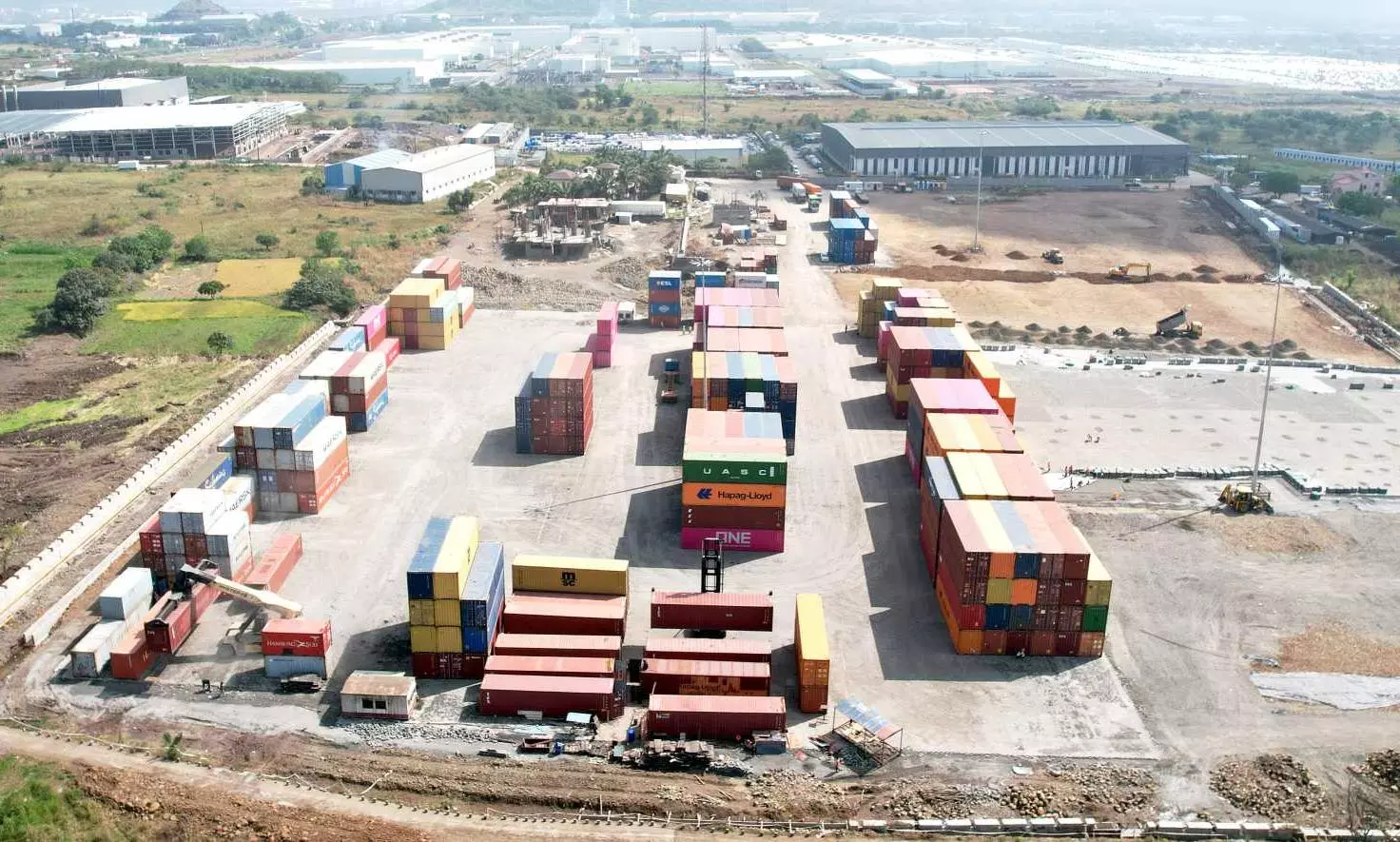
Image: KSH Distriparks


Every container movement between Pune and Jawaharlal Nehru Port Trust(JNPT), also known as Nhava Sheva carried an inefficiency that the industry had long accepted. Containers would arrive at factories, get unloaded, and then travel back empty to the port. Exporters would then send trucks again to collect empty boxes for the next shipment.
This repeated loop added time, cost and significant fuel consumption. KSH Distriparks is now trying to break this cycle with the launch of Pune’s first dedicated empty container yard, allowing containers to be reused within the region instead of moving back and forth to the port.
“In the last year, by reusing containers from Pune itself, we saved almost one million litres of fuel,” said Malcolm D’Souza, Chief Executive Officer, KSH Distriparks. “If we scale this further, the impact on fuel savings will be significant.”
Located about 8 km from the Mumbai–Pune Expressway, the 15-acre facility is designed to handle around 500 TEUs per day, or up to 100,000 TEUs annually. It brings together empty container storage, handling, repair, washing and maintenance at a single location. This allows exporters and shipping lines to access containers closer to their operations.
The need for such a facility has been building in Pune’s Chakan–Talegaon belt, one of India’s fastest growing manufacturing and export hubs. Despite rising volumes, the region lacked a dedicated system for empty container circulation, leaving exporters heavily dependent on JNPT.
That dependence led to long delays. According to D’Souza, trailers travelling to port-side yards often spend between 12 and 48 hours just to secure an empty container. This was due to long queues, inventory shortages and unorganised yard conditions.
“Every time a trailer went to JNPT, there were delays which made it difficult for exporters to plan their loading schedules,” he said.
By shifting empty container availability to Pune, the new yard removes a large part of this delay. Each avoided trip to JNPT cuts around 100 to 120 kilometres of travel. It also reduces exposure to congestion-prone routes such as the Mumbai–Pune ghat section, where traffic disruptions are common.
While the direct cost saving per container is limited and stands at about $20 to $30, the time savings are more significant. “You are saving more than 12 hours per shipment, and sometimes even up to 24 hours depending on conditions,” D’Souza said.
The impact goes beyond operations. India depends on imports for a large share of its fuel needs, and reducing unnecessary transport directly lowers fuel consumption. Fewer empty container movements also mean lower emissions, making the logistics chain more sustainable.
KSH Distriparks estimates that even a 50 to 60% reduction in Pune’s dependence on JNPT for empty containers could lead to meaningful gains in fuel savings, cost efficiency and turnaround times.
The facility also addresses container quality issues seen at port-side yards, where uneven and dusty surfaces often lead to damage. The Pune yard uses paver block flooring to ensure stable stacking and smoother vehicle movement. It also has infrastructure for container repair, washing and maintenance.
“We have repair, washing and cleaning facilities within the yard itself,” D’Souza said. “Customers can fix and reuse containers in Pune instead of sending them back to JNPT.”
In addition, the yard includes a dedicated pre-delivery inspection centre for vehicle exports. Exporters of completely built units can carry out inspection, washing, loading and lashing at a single location, reducing handling steps and transit time.
From a network perspective, the facility is expected to ease pressure on KSH Distriparks’ inland container depot in Talegaon. The ICD will now focus more on cargo handling and lead-in volumes, while the new yard will handle empty container storage and movement.
To further improve efficiency, the company plans to deploy a Yard Management System. This will provide real-time visibility of containers, reduce internal movement within the yard and improve equipment utilisation and traffic flow.
KSH Distriparks expects the facility to operate at around 30% utilisation in its first year, with plans to scale this up to 60 to 70%. Demand is expected to come mainly from the automotive sector, followed by high-tech and consumer durable industries. Other sectors such as forging, industrial goods and paper are also likely to benefit.
D’Souza said the project marks the beginning of a broader shift in inland logistics. “This is not a one-off project. It is a start,” he said. “By bringing container availability closer to where the cargo is, we can make the system faster, more efficient and reduce unnecessary movement.”
With Pune handling close to 900,000 TEUs of container traffic, the development points to a gradual move towards more localised logistics. By cutting empty runs, saving fuel and improving turnaround time, the new yard highlights how efficiency and sustainability can go hand in hand.