
Infrastructure boom alone won't fix India's logistics challenges
While massive infrastructure investments have strengthened connectivity, fragmented systems and procedural delays continue to hamper cargo movement.
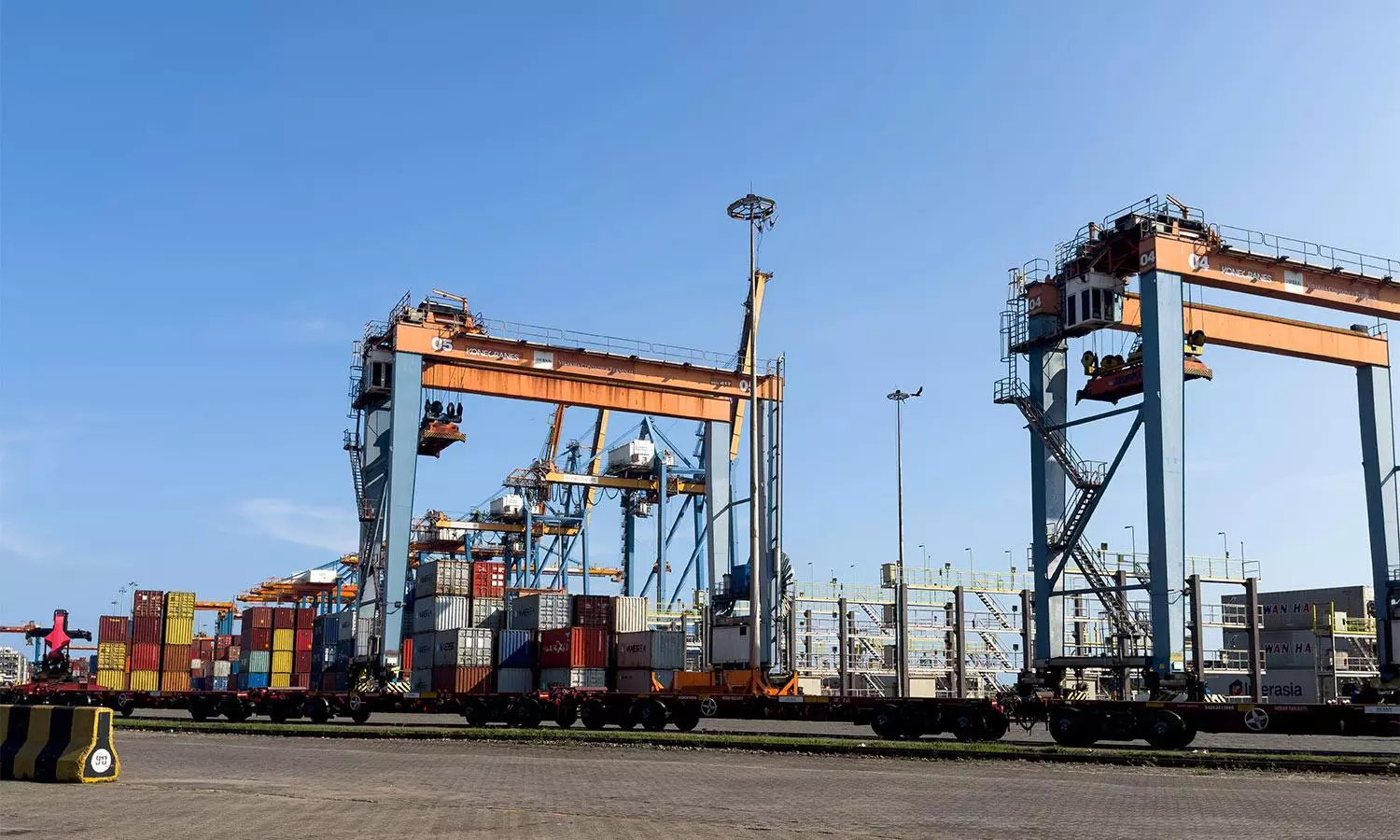


The Indian government is investing heavily in infrastructure to strengthen the country's trade and logistics capabilities. From the commissioning of the Vizhinjam International Seaport, India's first deep-water transshipment port, to the development of high-speed corridors such as the Delhi–Mumbai and Bengaluru–Mysuru expressways, the country is undergoing a rapid infrastructure transformation. These projects are expected to enhance connectivity, reduce transit times, and support economic growth.
"India's logistics sector is undergoing a structural transformation, driven by a clear policy vision, sustained infrastructure investments, and rapid digitalisation. Landmark initiatives such as the National Logistics Policy, PM Gati Shakti National Master Plan, Bharatmala Pariyojna, Sagarmala, the Dedicated Freight Corridors, and the Logistics Efficiency Enhancement Programme (LEEP) are collectively creating a more integrated, multimodal, and technology-enabled logistics ecosystem,” said Sunny Williams, Senior President, Allcargo Terminals.
However, a key question remains: despite billions of dollars being invested in ports, highways, and freight corridors, are these developments making logistics operations easier and more efficient for the companies that move India's cargo every day?
The Union Budget for FY27 earmarked approximately $142 billion for infrastructure development, representing a 9% rise from the $131 billion allocated in FY26. Additionally, the government has invested nearly $84.5 billion in highway construction over the last three years, highlighting its sustained commitment to enhancing the country’s transport infrastructure.
In addition, it recently approved a $15.4 million port connectivity project aimed at improving transport links and facilitating smoother cargo movement.
India Brand Equity Foundation (IBEF) reported that Credit Rating Information Services of India Limited (CRISIL) Infrastructure Yearbook 2023 estimates that India will spend about $1.64 trillion on infrastructure over seven fiscals through 2030, more than twice the roughly $770 billion spent in the previous seven years.
The Indian government is accelerating investments in multimodal transport infrastructure to improve logistics efficiency. As part of the Multi-Modal Logistics Parks (MMLP) programme, the Ministry of Road Transport and Highways (MoRTH) is developing 35 logistics parks, each spanning more than 100 acres. Designed with multimodal transport connectivity, modular warehousing, and container terminals near ports, these parks are expected to streamline freight movement while reducing logistics costs and transit times.
The Port Connectivity Project is also enhancing last-mile connectivity to operational and under-construction ports, with 36 of the 108 identified projects already completed.
“Highways and port capacity have improved, but the roads connecting industrial clusters, warehouses, and ICD to the main network are congested and poorly maintained.”Pramod Sant, Federation of Freight Forwarders’ Associations in India (FFFAI)
Pramod Sant, Director General at Federation of Freight Forwarders’ Associations in India (FFFAI), said, “Highways and port capacity have improved, but the roads connecting industrial clusters, warehouses, and ICD to the main network are congested and poorly maintained.” He added that despite significant investments in port capacity expansion, delays in container evacuation from terminals to Container Freight Stations (CFSs) and the hinterland remain a major challenge. Recent congestion at JNPT led to a backlog of nearly 30,000 containers, highlighting persistent operational bottlenecks.
While India's massive infrastructure push has helped bring logistics costs down to around 8–9% of GDP, industry experts say infrastructure alone is not enough. Rajesh Menon, Associate Director, Logistics Division at DPIIT, believes the next stage of progress will come from improving freight speeds and strengthening multimodal integration.
According to Williams, investments in port modernisation, multimodal logistics parks, cargo evacuation infrastructure, and digital platforms have significantly improved operational efficiency, resulting in faster vessel turnaround times and enhanced cargo visibility.
He said trucks on India's major freight corridors currently average speeds of just 50–60 kmph, significantly below the global benchmark of 70–80 kmph. He added that despite multimodal transportation’s potential to transform logistics efficiency and reduce costs, multimodal transportation has yet to deliver its full benefits due to persistent operational bottlenecks and implementation issues.
Similarly, Sant mentioned that the absence of a common portal for shipment visibility is the fundamental disconnect. “An importer or exporter today must navigate various systems such as logging ICEGATE for customs status, checking the port or terminal's own system for vessel and container movement, querying the CFS's portal for ground handling and storage updates, whereas each freight forwarder has its own trace and track system.”
He noted that while customs filings have become increasingly digital, query resolution remains largely manual. Queries raised by customs officers often necessitate physical follow-ups, clarification calls, or in-person visits, delaying cargo clearance.
Highlighting the organisational coordination level, Sant said that ports, terminals, customs, and forwarders frequently operate on different priorities and reporting structures. No single entity is accountable for end-to-end transit time. Infrastructure investment improves what each stakeholder can do in isolation, so delays accumulate at every transition rather than within any single stage.
ULIP (Unified Logistics Interface Platform) has the potential to become the backbone the ecosystem currently lacks. Rather than importers, exporters, and forwarders toggling between ICEGATE, port and terminal systems, CFS portals, and forwarder updates, ULIP is designed to integrate data from all these stakeholders into a single interface. If it matures into a transaction and visibility system, covering customs, ports, terminals, CFS, and transporters under one digital layer, it would directly resolve the fragmentation problem at the root, he explained.
Sant believes that process simplification would deliver faster results than further infrastructure investment at this stage. He said, “India has already built physical capacity at ports, highways and rail corridors are largely in place. Capacity is routinely underutilized because cargo continues to lose time to documentation, queries, multi-agency clearance, and fragmented digital tracking, rather than to physical constraints. Reforming these processes is also far quicker and cheaper.”
"India's logistics sector is undergoing a structural transformation, driven by a clear policy vision, sustained infrastructure investments, and rapid digitalisation.”Sunny Williams, Allcargo Terminals
“Continued collaboration between the government and industry, coupled with sustained investments in integrated infrastructure and digital innovation, will be instrumental in realising the vision of Viksit Bharat 2047,” said Williams.
While India's infrastructure expansion is reshaping the logistics landscape, the next phase of transformation will depend less on building new assets and more on making existing ones work together efficiently. Streamlined processes, end-to-end digital visibility, and stronger coordination across the supply chain will determine whether these investments translate into tangible gains for businesses moving cargo every day.